Archive for the ‘Expat News’ Category
Tuesday, January 31st, 2012
October 2010 marked the start of the Cholera outbreak in Haiti. The Centers for Disease Control and Prevention outbreak notice is still in effect today. Since the first case of Cholera, over 470,000 Haitians have become ill due to this disease. The earthquake in January of 2010 destroyed many homes leading to a number of displaced people. Although the exact means of how this disease was re-introduced into Haiti has not been determined, it is thought to be related to a combination of unsteady public health and flooding after the quake. The situation is still being battled today. The 2010 outbreak was the first in over 100 years for Haiti and although all areas of the country have been affected, the largest portion of the disease is in Artibonite Departmente.
Haiti is not the only area affected by this disease. In November of 2010 the Dominican Republic was also hit with a Cholera outbreak which the CDC still has an outbreak notice warning in effect for.
Cholera might seem like a disease of the past but it is still responsible for over 100,000 deaths globally each year. Characteristics of the disease that call for immediate attention include vomiting, watery diarrhea and leg cramps. When treated right away full recovery is possible without any long term effects.
One basic way to fight the battle against Cholera is by ensuring proper sanitation measures are taken. Since the disease is caused by the spread of a bacteria, the CDC advise that hands should be properly washed and only treated water should be used for drinking and cooking, all messes should be cleaned up as necessary, food should always be thoroughly cooked, and toilets or other proper means of fecal matter disposal needs to be used at all times.
Tags: Cholera Outbreak Posted in Expat News | No Comments »
Tuesday, December 13th, 2011
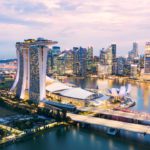
An island that was first occupied predominantly by fisherman has changed its clientele over the years. Singapore just recently became the sixth most expensive city in Asia for an expat to live in according to a survey by consultancy ECA International. This new title has pushed it to pass Hong Kong for the first time as Hong Kong has dropped to ninth in the ranking of costliest cities for expats. However, Singapore expats still have a ways to go before they catch up with Tokyo as the most expensive Asian city for expatriates.
In terms of the housing market for Singapore expats, how does Singapore rank? It is in third for having the most costly rentals in Asia, not yet beating Hong Kong in this department. However, ECA International’s latest survey on this topic brought in results showing that the cost of apartments in areas where expats typically reside has spiked 15 percent in cost since 2005.
Even with a consumer price index rise of 5.4 percent in a year as of October, it hasn’t frightened away expats in Singapore. You might be wondering why they still make up 18 percent of the 4.4 million population in Singapore even with the cost of living increase. Perhaps it is thanks to Singapore ranking fifth as the highest net take-home pay location for expatriates in Asia, according to an ECA survey.
If you are leaving your home country to contribute to the 18 percent of Singapore expats, you might want to consider first looking into purchasing a health insurance plan that meets your needs. International Citizens allows you to compare expat health insurance plans side-by-side, and then download a brochure for more information on benefits and exclusions.
If you have questions regarding any of the plans you are able to contact one of our licensed insurance agents who would be happy to assist you.
Tags: expat health insurance, Singapore Expats Posted in Expat News | No Comments »
Friday, October 21st, 2011
The United States, along with many Western nations, have struggled through the economic decline with high unemployment. The United States currently has an unemployment rate of 9.1% , Greece has an unemployment rate of 16.6%, the United Kingdom is at 8.1%. With these staggering numbers, many people are beginning to look outside their nation’s borders for alternative opportunities.
China, one of the BRIC nations, is one of the fastest growing economies in the world with an unemployment rate of only 4.1%. China’s growth in the last year was 9.1% compared to the United State’s growth of only 1.6% and the Euro area of 1.7%. It is no surprise that an increasing amount of expats are considering the move to China. While the United States outnumbers Europeans living in China, recently there has been an increase in the number of Europeans choosing to move to China.
According to the official data from the Ministry of Human Resources and Social Security in China, there was a 4% increase in the number of expats moving to China over the last year to a new total of 231,700. With so many open doors do to growth and expansion, expats that move to China will have the opportunity to get higher level jobs with either local or international companies.
Currently, many expats have seen an increase in demand for the financial services, retail, and pharmaceutical industries. Local chinese firms are looking to hire expats with talent to help with international expansion. International companies are looking for expats that have an understanding of the international climate, the ability to speak English (and Mandarin!), and assistance in bridging cultures.
While the jobs will ultimately depend on experience and company-fit, the top jobs in China are teachers, CEOs, managers, engineers and consultants. Approximately 85% of the expat workforce is employed by foreign-invested companies compared to local Chinese firms. Those expats working for local companies work primarily in technical fields such as engineers or managers in high-tech manufacturing. Otherwise, approximately 40% of positions are in sales and marketing, 20% is in engineering, 10% in management (including in accounting and finance), and IT is only 5%.
Tags: Expats Move to China, jobs for expats in china Posted in Expat News | Comments Off
Friday, October 14th, 2011
The expatriate community in the Netherlands is familiar with the 30% ruling regime which exempts temporary workers from paying taxes on 30% of their income. Initially set up to compensate workers from the additional costs incurred due to relocation, this may no longer be the case.
Now, expats in the Netherlands are up in arms about a recent provision that will modify eligibility and duration of this rule. The Dutch government announced that if passed, the new changes will be implemented in 2012. The following changes would go into effect for foreigners hired abroad by a company located in the Netherlands:
- Younger employees who begin work after their Ph.D. program can apply for the rule
- Employee must have a specific expertise not easily found within the country’s labor market
- Employees living 150 km from the Dutch border will no longer be entitled to the rule (for example, residents of Germany)
- The length that this rule applies for will be reduced
Currently the 30% rule extends from the first day of employment for 120 months – or 10 years total. If the provision is accepted, the duration of the rule may be reduced if an individual has been terminated from their job in the last 15 years before starting their new job or if the individual has been living in the Netherlands 10 years before starting their new job.
While this provision was just announced, many employers and expats in the Netherlands are predicting that these changes may effect the number of expatriates.
Tags: Expatriates in Netherlands, Expats in Netherlands, Tax Incentive Changes for Expats in Netherlands Posted in Expat News | Comments Off
Friday, September 30th, 2011
A recent notice published on the US State Department’s website captured reader’s attention on the upcoming hurricane and typhoon season this year. While this effects many people around the world at their home, this can also cause delays, trip cancellation, or evacuation if you are traveling overseas.
Hurricanes is a violent, tropical storm on the North Atlantic with wind speeds of 72 miles per hour (or 32 meters per second). Typhoons are similar, although occuring on the western Pacific and China area. If you’ve never experienced a hurricane or typhoon, the strength of the storm can vary – and so can the damage. Whether you are inland, or on the coast, hurricanes and typhoons are unpredictable and projected paths can vary hour by hour. Along with these natural occurences, you can expect wind, flying debris, flooding, and tornadoes.
Hurricane season is from June until November in the Atlantic and typhoon season overlaps from May until November. If you will be traveling during this time period, it is important to think of an emergency plan. One of these steps may include an travel insurance plan which is designed to cover you in case of a hurricane and typhoon.
Our trip cancellation plan, for example, considers the fact the weather is unpredictable and that you need to be protected and out of danger. This hurricane and typhoon insurance will cover your trip costs in case you are unable to get to your final destination because the common carriers are down or if natural disaster at the site of your destination renders that destination uninhabitable.
But what if you are already in your destination and you need to evacuate?
There are other travel and medical insurance plans that will assist you as a covered benefit. Our Atlas Travel plan, a comprehensive health and travel insurance, provides coverage for natural disaster. In the event of natural disaster (including a hurricane, flood, tornado, tsunami, typhoon, etc.), the plan will cover up to $100 a day for 5 days if displaced from planned, paid accommodations due to evacuation from forecasted disaster or following a disaster strike.
Tags: Hurricane and Typhoon Insurance, natural disaster insurance, trip cancellation plan Posted in Expat News, International Travel Insurance | Comments Off
Friday, September 9th, 2011
Egypt has long been known as a major tourist destination attracting visitors from across the globe. Travelers come to Egypt to get a glimpse at the only standing original Seven Wonders of the World, the Great Pyramid of Giza. As one of the main ancient and cultural hubs, visitors can appreciate mosques and temples, mummies and hieroglyphics, booming cities and sleepy towns.
With the recent unrest in the region, however, the number of tourists in Egypt has been declining. Last week, Egyptian officials stated that revenues from the tourism industry reduced over the year from $10.6 billion USD (2010-11) to $11.6 billion USD (2009-10).
On Thursday, however, an announcement curtailed any hope that these numbers would reverse. The Egyptian government announced visa changes in Egypt that will affect individual travelers. The Egyptian government stated that, regardless of origin, tourists would now be require to apply for a visa through local embassies and consulates prior to their arrival (this is waived for tourists groups traveling with licensed tour operators). This announcement ends the decade long unrestricted entry for visitors from the United States, Europe, Latin America, Asian countries, Australia, and Gulf countries which were able to simply obtain their visa at a major entryway into the country.
The actual day of implementation is still unknown. Cabinet spokesman Mohamed Hegazy said that this may start as early as next week, however no official date has been set. In the interim, travelers will be subject to the old regulation of obtaining a visa upon arrival. The implications of this new regulation is still unknown, however tourism officials are up in arms. Amr el-Ezzaby, head of the Tourism Promotion Organization, said that these new visa changes in Egypt will not “only hurt Egypt’s tourism but the image of Egypt as a stable country.”
Tags: Visa Changes in Egypt Posted in Expat News | Comments Off
Friday, August 5th, 2011
Nicaragua, commonly referred to as to as “the country of lakes and volcanoes,” has become a top destination for expatriates to retire! The low cost of living has helped Nicaragua become one of the most affordable and comfortable retirement options in the world! With its sparkling lakes, impressive volcanoes, friendly people and towns filled with cultural richness – it’s no wonder why this country is so popular! The country encourages foreigners to come and see for themselves all it has to offer.
Nicaragua, officially known as the Republic of Nicaragua, is the largest country located in Central America and is bordered by Honduras and Costa Rica. While Spanish is the official language, many residents also speak English. The climate is typically warm and there are two major seasons, dry and rainy. The dry season is between January and June and the rainy season is between June and December. The three hottest months are March, April and May.
Nicaragua now offers a retirement program designed to attract retirees and pensioners to move to Nicaragua. Their government created the Law of Resident Pensioners and Retirees (Decree No 628) which states that retirees are eligible for a number of benefits. Some of those benefits include the following:
- No income tax on money you make outside of Nicaragua.
- You can bring a maximum of $20,000 worth of household goods into the country duty-free.
- Your car or truck is tax exempt up to $25,000.
- If you build a house in Nicaragua, construction materials are tax exempt for up to $50,000.
- If you are going to start a business, you could be exempt from income and real estate taxes for ten years.
I’m sure you can see why Nicaragua has become such a popular destination for retiring expats! Now that you’ve decided to retire to Nicaragua, what are you going to do about healthcare?
You should have no problems finding modern private hospitals in the Managua area. The Vivian Pellas Hospital in Managua is considered the best in all of Central America. However, as you venture away from the capital and other major cities, the more rare and rustic the health services get. For this reason, healthcare can be a concern for expatriates considering retiring in Nicaragua.
Many expats retiring in Nicaragua purchase an international major medical plan like the Global Medical plan from IMG. This plan offers lifetime coverage if you enroll in the plan before your 65th birthday and maintain continuous coverage for 10 years. Prior to your 75th birthday you’ll receive a summary of benefits for your renewal on the Global Senior Plan. There is no additional medical underwriting required! Just simply review the benefits summary, complete and return the enrollment form with your premium.
If choosing the right plan for you becomes too daunting and you’d like assistance, please contact one of our licensed expatriate insurance agents. They will be happy to help!
Tags: expatriates in Nicaragua, Expats in Nicaragua, retire in Nicaragua Posted in Expat News, International Expatriate Health Insurance | Comments Off
Friday, July 22nd, 2011
Back in March, as many of our readers know, Japan was hard-hit by the strongest earthquake ever recorded in this region. At an 8.9 magnitude, Japan has been struggling to reach its level of productivity since the earthquake struck. Traveling to Japan today, you will find that many people have returned to daily life as they once knew it. Since the aftershocks have ceased, schools and shops are open, stocked, and on their regular schedule. If you walk down many of the streets, you’ll see people going about their daily business just like before.
That being said, however, the expatriate community in Japan has suffered some setbacks. Right after the earthquake, approximately 80% of expatriate professionals left the country immediately and only four-fifths of this group actually returned to Japan. With fear of future earthquakes and the leaking nuclear plant, many of the foreign labor pool left for other opportunities primarily in Europe and Singapore.
This comes at a time when many Japanese companies are facing supply shortages, as well as losses in production, capacity, and output. Many companies previously enjoyed the plentiful expatriates in Japan, however with the aftermath of the earthquake many of the IT and financial service expats have left. While this only accounts for a small portion of Japan’s labor pool, many of these expatriates in Japan held senior positions and were key to the company’s performance. The biggest loser is Tokyo who has seen the dramatic reduction in expatriates that this city once relied on.
Many expatriates, particularly those with families, are concerned about health risks, the economy, and employment. Because of this uncertainty, many companies in Japan are sweetening the deal. Many companies are now offering larger compensation packages to recruit expats while other companies are trying to fill the positions locally. Companies looking to the Japanese workforce are running into problems. There is a skill shortage within the nation, particularly with English fluency and IT capabilities. In fact, 80% of businesses in Japan have said that they were unable to hire workers with the required skills.
Tags: Expat workforce in Japan, Expatriates in Japan, Expats in Japan Posted in Expat News | 1 Comment »
Friday, July 15th, 2011
Alas, July 9, 2011 marks the official date of independence for the newest country in the world, The Republic of South Sudan. Officially marking the 195th independent country recognized by the US Department of State, South Sudan is a diverse region home to the many ethnicities predominantly Dinka, Shilluk, and Nuer. While South Sudan has its roots in subsistence agriculture, the majority of its wealth is based on their oil reserves.
Even with this oil wealth, former Sudan was one of the poorest nations in the world. Currently, South Sudan is home to 6 million people. After a 22 year civil war between the North and South, Sudan has taken a major hit economically, socially and politically. During this period, 2 million people have died and 4 million people have been displaced.
In an effort to change the current environment, leaders decided back in January to put forth a referendum to vote on whether the South Sudanese wanted sovereignty from their northern neighbor. An overwhelming 99% voted in favor of independence which was the final seal in their separation from North Sudan back to the 1956 boundaries.
Currently, South Sudan is making the switch over to an independent, sovereign nation. One major issue to the border dispute is over the oil reserves. While the land borders have not yet been finalized, approximately 75% of the oil reserves are located in South Sudan. That being said, however, most of the refineries and Red Sea pipelines are in Sudan (North). This reliance on the northern neighbor reveals that both parties will continue to work together in order to promote progress within both countries. This is critical to both parties as South Sudan is a landlocked country that requires access to the sea for oil transport.
We will continue to follow developments on this new country as South Sudan is officially the newest country since 1993 when Eritrea split from Ethiopia.
Tags: newest country in the world, South Sudan, Sudan referendum Posted in Expat News | Comments Off
Friday, June 24th, 2011
Ever dreamed of traveling to Albania? Located in the heart of the Mediterranean, Albania is a traveler’s paradise if you are looking for a laid back, outdoors summer vacation. Enjoy the pristine coastline with its clear waters, hike the Dajti mountains for a captivating view of the capital city, learn ancient culture in the Butrint ruins, and explore castles that are scattered throughout the nation.
You may be asking yourself, why travel to Albania now? Summer season has encouraged the nation to ease its visa restrictions by making Albania even more accessible. Since May 13, 2011, the Albanian government is allowing citizens from Azerbaijan, Kazakhstan, Ukrain, Russia, China, and Taiwan to travel to Albania for up to 90 days visa free. Visitors have until October 31, 2011 to enter without a visa as long as visitors have valid travel documents.
Ambassador Sokol Gjoka explained that this new temporary visa policy is “not only for tourist, but also for all other categories of citizens, including businessmen and participants in international and cultural events.”
This comes after last year’s statistics were published finding that the number of tourists grew 32% last year to 3.5 million visitors. Albania has no intention of stopping there – it is hoped that this temporary visa-free period will continue to attract visitors from around the world making Albania a top summer destination.
Tags: Travel to Albania Posted in Expat News, International Travel Insurance | Comments Off
|